
Most visitors give Warsaw two days and end up seeing a fraction of what actually matters. That’s the wrong approach for a city where the Old Town was rebuilt brick-by-brick after 85% of it was destroyed in 1944 and the historic center still earned UNESCO status in 1980 despite being, technically, a 20th-century reconstruction. Warsaw sightseeing works best when you split the city into distinct zones — royal, communist-era, Jewish heritage, and green — rather than trying to walk everything in one straight line. Below is what actually deserves your time, what to skip, and how much each stop realistically costs in hours and złoty.
Old Town and the Royal Route
Warsaw’s Old Town (Stare Miasto) is the obvious starting point, centered on Rynek Starego Miasta with its colorful merchant townhouses. The Royal Castle at the square’s edge houses period interiors and a collection that includes works attributed to Rembrandt; entry runs around 30 PLN for a full-price ticket, though Sundays are free for permanent exhibitions. From there, the Royal Route (Trakt Królewski) runs roughly 4 km south through Krakowskie Przedmieście and Nowy Świat toward Łazienki Park — this stretch alone covers half the city’s must-see churches, palaces, and cafés.
Skip the horse-drawn carriage rides around the square; at 150-200 PLN for fifteen minutes they’re a tourist tax, not a way to see anything you can’t see on foot in the same time.
Palace of Culture and Science
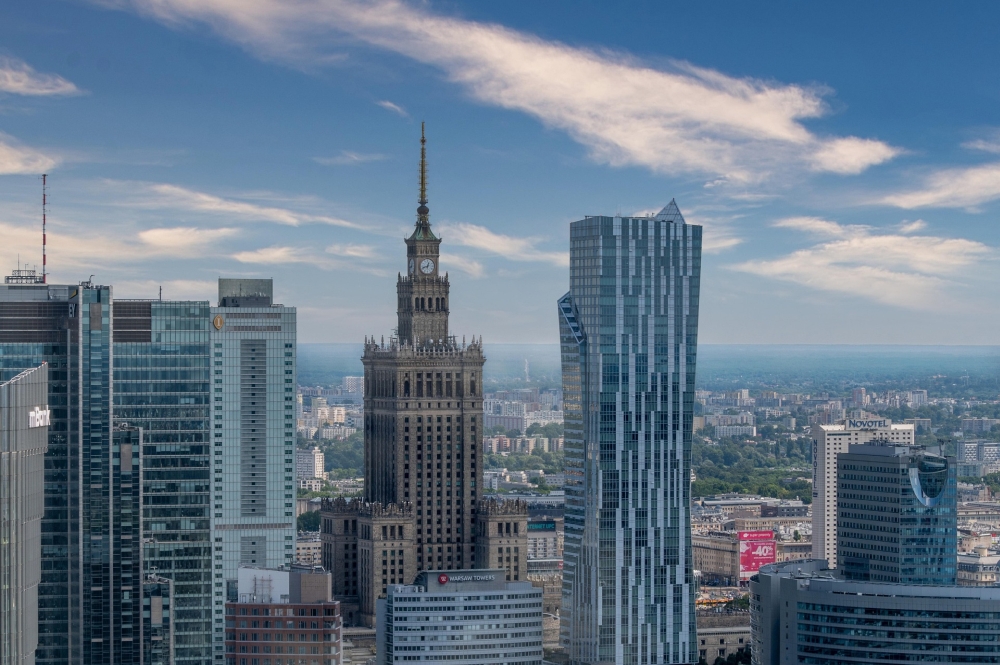
Pałac Kultury i Nauki, a 1955 gift from the Soviet Union, is Poland’s tallest building at 231 meters including its spire. The 30th-floor observation terrace (ticket around 30 PLN) gives the only view of Warsaw where you actually see the whole city at once, since it’s the one landmark you can’t see from itself. Locals are split on the building — some want it torn down, others treat it as an accidental icon — and that ambivalence is itself part of understanding modern Warsaw.
The Palace of Culture contains over 3,000 rooms and originally housed a swimming pool, a museum of technology, and four theatres under one roof — a Stalinist attempt to be a city within a city.
POLIN Museum and Jewish Warsaw
The POLIN Museum of the History of Polish Jews, opened in 2013 on the site of the former Warsaw Ghetto, covers a thousand years of Jewish life in Poland — not only the Holocaust, which is the part most visitors expect and the part that turns out to be a small fraction of the exhibition. Budget at least three hours; the core exhibition alone spans eight galleries. Entry is around 30 PLN, free on Thursdays.
Nearby, the Warsaw Ghetto Uprising memorial and remaining fragments of the ghetto wall on Sienna Street are free to visit and take no more than twenty minutes, but they change how the rest of the district reads.
Warsaw Uprising Museum
This is a separate institution from POLIN and covers the 1944 Warsaw Uprising specifically — 63 days of resistance against German occupation that ended with the city’s near-total destruction. The museum uses sound, film, and reconstructed sewers used by insurgents to move between districts. Entry costs around 25 PLN; plan for two to three hours, and go on a weekday if possible since weekend queues can run 45 minutes or more.
Łazienki Park and Wilanów Palace
Łazienki Królewskie is a 76-hectare park built around an 18th-century summer residence, the Palace on the Isle, and it’s free to enter (only the palace interior charges admission, around 30 PLN). Free Chopin piano concerts run at the Chopin Monument every Sunday from May to September, usually at noon and 4pm.
Wilanów Palace, about 8 km further south, is Poland’s answer to a smaller Versailles — a baroque royal residence that survived the war intact because German forces used it as a hospital rather than destroying it. The gardens are free; the palace interior runs around 30 PLN.
Vistula Boulevards and Praga District
The Bulwary Wiślane along the river became one of Warsaw’s better public spaces after a 2011-2014 redevelopment, and they’re free, open late, and lined with bars in converted barges during summer. Across the river, Praga is the one central district that wasn’t leveled in 1944, which means original pre-war tenements, courtyards, and a rougher, more layered feel than the reconstructed center. The Neon Museum in Praga’s Soho Factory complex — a collection of salvaged Cold War-era neon signage — is a niche stop but a genuinely unique one, entry around 18 PLN.
Comparing the main sights
| Attraction | Area | Time needed | Entry cost |
|---|---|---|---|
| Royal Castle | Old Town | 1-1.5 h | ~30 PLN |
| Palace of Culture terrace | City center | 30-45 min | ~30 PLN |
| POLIN Museum | Muranów | 3+ h | ~30 PLN |
| Warsaw Uprising Museum | Wola | 2-3 h | ~25 PLN |
| Wilanów Palace | Wilanów | 2-3 h | ~30 PLN (interior) |
| Neon Museum | Praga | 45 min | ~18 PLN |
How to plan the days
Two days covers the essentials: Old Town, Royal Route, and Palace of Culture on day one; POLIN and the Uprising Museum on day two, with Łazienki squeezed in if weather cooperates. Three days lets you add Wilanów and Praga without rushing. Public transport makes all of this workable without a car — a 24-hour ticket costs 15 PLN and covers buses, trams, and the metro’s two lines, and Warsaw’s compact center means most of these stops sit within a 20-minute tram ride of each other.
Frequently Asked Questions
How many days do you need to see Warsaw?
Two days cover the main sights — Old Town, the Palace of Culture, and one museum. Three days let you add Wilanów and Praga without rushing.
Is Warsaw’s Old Town actually historic?
Physically, no — 85% of the district was destroyed in 1944, and the current buildings are a post-war reconstruction. Even so, the layout and architectural detail were recreated faithfully enough that UNESCO added it to the World Heritage list in 1980.
What can you see in Warsaw for free?
Łazienki Park, the Vistula boulevards, fragments of the ghetto wall on Sienna Street, and the Sunday Chopin concerts by his monument all have no entry fee.
Is Wilanów Palace worth the trip if it’s far from the center?
Yes, if you’re staying three days — the palace survived the war intact, making it a rare example of a pre-war residence in this region.
How much does a public transport ticket cost in Warsaw?
A 24-hour ticket costs 15 PLN and covers buses, trams, and both metro lines.
sources: zwiedz.pl, Wikipedia, um.warszawa.pl