
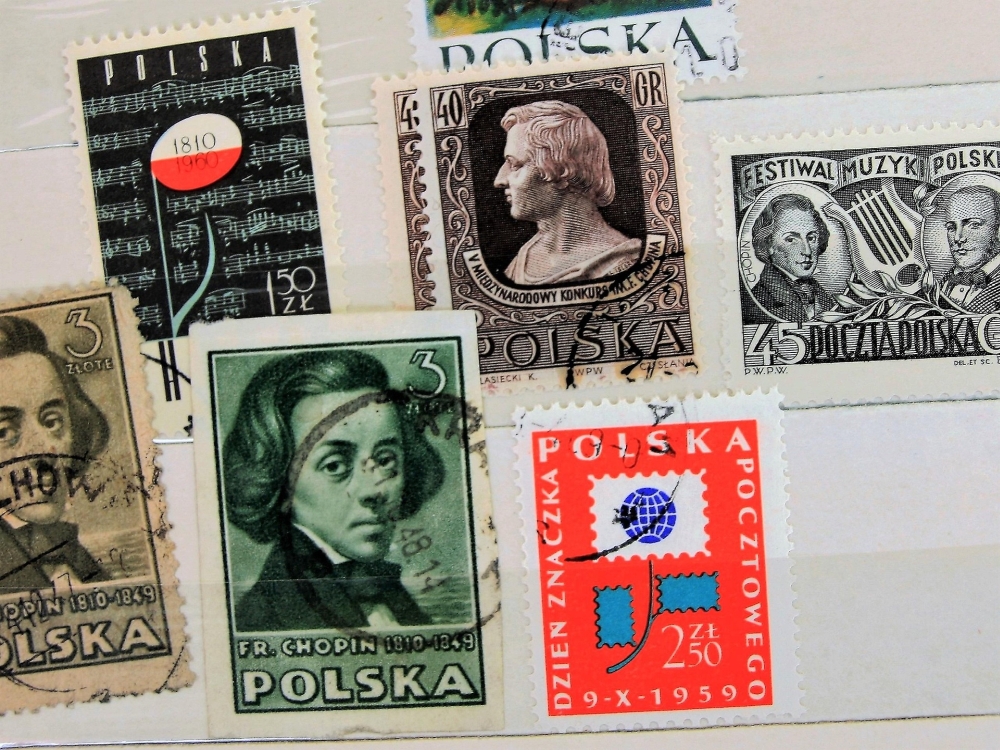
Mention Polish music to almost anyone outside Poland and you’ll get one name back immediately, and it’s the right one — but stopping there misses a much deeper catalogue spanning nearly two centuries of composers, virtuoso performers, and contemporary artists who’ve built international careers well beyond that single reference point. Poland’s most famous musicians range from Romantic-era piano composition to Cold War-defying orchestral works to modern pop exports, and each generation solved a different problem in getting Polish music heard abroad. Here’s who actually shaped that history, and where their influence still shows up today.
Fryderyk Chopin: the reference point for everything after him
Fryderyk Chopin (1810-1849) remains Poland’s most globally recognized cultural export in any category, not just music. Born near Warsaw and largely active in Paris from age 20 onward, Chopin composed almost exclusively for solo piano — nocturnes, mazurkas, polonaises, ballades, and études that redefined what the instrument could express emotionally, moving it away from the more formal Classical style of Mozart and Haydn toward something far more personal and harmonically adventurous. He died at 39, likely from tuberculosis, having composed a body of work still considered central to the standard piano repertoire nearly two centuries later.
His legacy is kept institutionally alive through the International Chopin Piano Competition, held in Warsaw every five years since 1927 — one of the oldest and most prestigious music competitions in the world, and a career-launching event for classical pianists globally, not just Polish ones. Winners have included some of the most significant pianists of the 20th and 21st centuries, and the competition remains the clearest ongoing link between Chopin’s 19th-century legacy and contemporary classical music culture.
Chopin’s heart, at his own request, was removed after his death and smuggled back into Poland by his sister, sealed in a jar of alcohol — it remains interred in a pillar inside Warsaw’s Holy Cross Church to this day.
The virtuoso pianists who carried his legacy
Ignacy Jan Paderewski was, before he became Poland’s Prime Minister in 1919, one of the most famous concert pianists in the world, filling concert halls across Europe and the United States and becoming a symbol of Polish cultural identity during a period when Poland didn’t formally exist as an independent state. Arthur Rubinstein, born in Łódź in 1887, went on to become one of the 20th century’s most celebrated interpreters of Chopin specifically, with a recording career spanning decades and a reputation as one of the defining pianists of his era.
More recently, Krystian Zimerman, winner of the International Chopin Piano Competition in 1975 at just 18 years old, built a career as one of the most exacting and technically renowned pianists performing today — known for controlling every variable of his live performances, including shipping his own custom-tuned piano to concert venues rather than relying on whatever instrument is available locally.
Krzysztof Penderecki and 20th-century avant-garde composition
Krzysztof Penderecki (1933-2020) took Polish composition in a radically different direction from the Romantic piano tradition, becoming one of the defining voices of 20th-century avant-garde orchestral music. His 1960 piece “Threnody to the Victims of Hiroshima,” written for 52 string instruments using unconventional playing techniques to produce dense, dissonant textures, remains one of the most instantly recognizable and frequently studied works of post-war classical composition — later reused extensively in horror and thriller film scores, including “The Shining” and “The Exorcist,” introducing his sound to audiences who’d never have encountered classical concert music otherwise.
Wojciech Kilar and film composition
Where Penderecki wrote for the concert hall, Wojciech Kilar built his international reputation scoring films, most famously Francis Ford Coppola’s 1992 “Bram Stoker’s Dracula” — a score that remains one of the most recognized horror film soundtracks of its era. Kilar’s earlier career in Poland also included decades of scores for Polish cinema, making him one of the country’s most prolific film composers domestically before his Hollywood breakthrough.
Henryk Wieniawski and the violin tradition
A generation before Chopin’s piano works became the standard reference for Polish classical music abroad, Henryk Wieniawski (1835-1880) was doing similar work for the violin — composing technically demanding concertos still used today as benchmark repertoire for advanced violin students and competition entrants. The Henryk Wieniawski Violin Competition, held in Poznań since 1935, mirrors the Chopin competition’s role for pianists, serving as one of the oldest violin competitions in the world and a significant career launchpad for young violinists internationally.
Comparing the major figures
| Artist | Era / Genre | Defining work or role |
|---|---|---|
| Fryderyk Chopin | Romantic, solo piano | Nocturnes, mazurkas, polonaises |
| Henryk Wieniawski | Romantic, violin | Violin concertos, still-used technical repertoire |
| Krzysztof Penderecki | 20th-century avant-garde | “Threnody to the Victims of Hiroshima” |
| Wojciech Kilar | Film scoring | “Bram Stoker’s Dracula” score |
| Krystian Zimerman | Contemporary classical piano | 1975 Chopin Competition winner |
Rock, pop, and the post-1989 generation
Polish popular music built a distinct identity domestically during and after the Communist era, though it rarely crossed language barriers the way classical composition did. Bands like Maanam, fronted by the late Kora Jackowska, and Republika defined Polish new wave and rock through the 1980s, giving Poland’s youth culture a genuinely homegrown alternative to Western imports even under censorship pressures. Opera also has a notable Polish figure in Jan Kiepura, a tenor who became an international star in the 1930s across European opera houses and Hollywood musical films, blending classical vocal training with mainstream celebrity in a way few opera singers of his era managed.
More recently, contemporary Polish pop and alternative artists — figures like Dawid Podsiadło, who moved from a televised talent competition win into a critically respected album career, or sanah, whose blend of folk-pop melodicism built a large domestic streaming audience — represent a newer generation working primarily in Polish rather than chasing English-language crossover, reflecting a music industry increasingly confident building on domestic streaming numbers rather than needing international recognition to sustain a career.
Why classical dominates the international reputation
The pattern across this list isn’t accidental: Polish classical composition travels internationally far more easily than Polish-language pop or rock, simply because instrumental music carries no translation barrier. A Chopin nocturne or a Penderecki string piece communicates the same way in Tokyo, Warsaw, or Buenos Aires, while a Polish-language pop song needs subtitles or translation to reach the same audience a Spanish or English song reaches automatically. That’s the core reason the classical figures on this list remain far better known internationally than most of Poland’s contemporary pop and rock artists, regardless of relative talent or domestic popularity.
For readers wanting to explore Polish music more directly — sheet music, recordings, or deeper catalogues across genres — nuta.pl is a useful resource covering a wide range of Polish musical material beyond just the historical figures covered here.
Frequently Asked Questions
Who is considered Poland’s most famous musician of all time?
Fryderyk Chopin holds that position by a wide margin — his piano compositions remain central to the classical repertoire nearly two centuries after his death, and the International Chopin Piano Competition in Warsaw continues to anchor his legacy in contemporary classical music.
Are there any Polish composers known primarily for film music?
Yes — Wojciech Kilar is the clearest example, best known internationally for scoring Francis Ford Coppola’s “Bram Stoker’s Dracula,” alongside a long career composing for Polish cinema domestically.
What is the Chopin Competition, and why does it matter?
It’s an international piano competition held in Warsaw every five years since 1927, widely regarded as one of the most prestigious classical music competitions in the world and a significant career launchpad for young pianists, Polish and otherwise.
Why isn’t Polish pop or rock music as internationally famous as its classical composers?
Language is the main barrier — instrumental classical music needs no translation to be understood internationally, while Polish-language pop and rock require subtitles or translation to reach non-Polish-speaking audiences, limiting international crossover regardless of domestic popularity.
Did any Polish musicians achieve fame outside of classical music before the modern era?
Yes — tenor Jan Kiepura became an internationally recognized opera and film star in the 1930s, performing across major European opera houses and appearing in Hollywood musical films, making him one of the earliest Polish musicians to achieve mainstream celebrity abroad outside the classical concert tradition.