
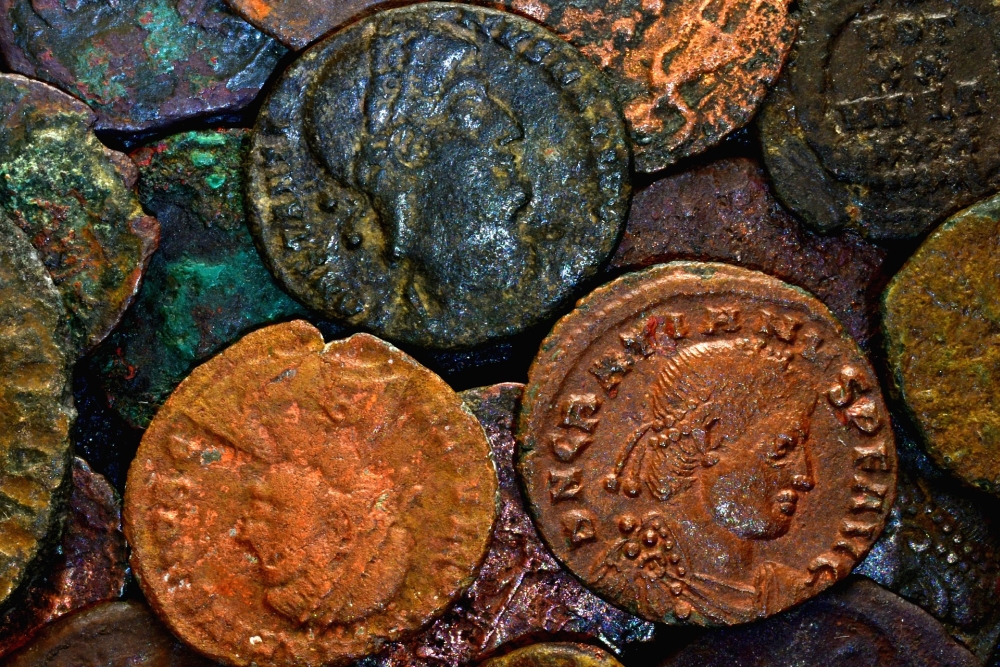
A coin that was never even legally allowed to enter circulation ended up selling for nearly $19 million — more than most people will pay for a house, a small business, or a private jet, for an object worth $20 in the currency it was minted for. The world’s most valuable coins rarely earn their price tags from the metal they’re made of; they earn it from a specific, often bizarre story — a botched melt order, a king’s private collection, a die error nobody caught before the coin left the mint. Here’s what actually sits at the top of the numismatic market, and why each of these coins broke the record it did.
1933 Double Eagle: the coin that was supposed to not exist
The 1933 Double Eagle, a $20 gold piece struck at the Philadelphia Mint, holds the all-time auction record at $18,872,250, sold at Sotheby’s in June 2021. Its value comes entirely from the circumstances of its near-total destruction: President Franklin Roosevelt’s 1933 Executive Order 6102 banned private gold ownership just as the coin was minted, and the U.S. Mint ordered all 445,500 examples melted down before official release. A small number — believed to be around 20 — were stolen from the Mint by a cashier before the melt and sold to coin dealers. The Secret Service spent decades recovering most of them, but one example escaped through legal channels after being sold to King Farouk of Egypt, whose ownership eventually gave the piece its “King Farouk” nickname and cemented its status as the most famous surviving specimen.
Owning a 1933 Double Eagle was technically illegal in the United States for decades — the Farouk specimen only became legal to privately own after a 2001 agreement between the U.S. government and the coin’s then-owner, monetized specifically through its eventual public sale.
1787 Brasher Doubloon: America’s first gold coin
The 1787 EB Doubloon, part of the Garrett Collection, sold for $9,360,000 at Heritage Auctions in January 2021, making it the second-most valuable coin ever sold at auction. Struck privately by New York goldsmith Ephraim Brasher — his initials, “EB,” are stamped directly onto the coin — it predates official U.S. Mint gold coinage entirely, making it effectively America’s first gold coin, struck at a moment when the young United States had no standardized federal currency of its own.
1804 Draped Bust Dollar: rarer than the date suggests
The 1804 Draped Bust Dollar (Ex-Childs specimen) sold for $7,680,000 in 2021, and its story is a numismatic irony: despite the 1804 date stamped on its face, these coins weren’t actually struck until decades later, around 1834-1835, when the U.S. Mint produced special presentation pieces for diplomatic gifts using the old date to match Mint records rather than the actual striking year. Only a handful of genuine examples exist across all known varieties, and the coin has held near-mythical status among American numismatists since the 19th century, long before modern auction records existed to formally rank it.
Why these three prices don’t reflect metal value at all
None of the top auction records above come remotely close to being explained by gold or silver content — a 1933 Double Eagle contains roughly one troy ounce of gold, worth a few thousand dollars at any point in recent history, a tiny fraction of its $18.9 million sale price. What actually drives these numbers is a combination of extreme rarity (often single-digit surviving examples), a documented and often dramatic ownership history, and legal or historical significance that turns the object into something closer to a museum artifact than a piece of currency. Auction houses like Heritage Auctions and Stack’s Bowers Galleries maintain extensive public sale-price databases specifically because provenance and verified sale history are what collectors actually pay for.
Comparing the record holders
| Coin | Sale price | Year sold | Why it’s valuable |
|---|---|---|---|
| 1933 Double Eagle | $18,872,250 | 2021 | Nearly all melted; one legal survivor |
| 1787 Brasher Doubloon | $9,360,000 | 2021 | America’s first privately struck gold coin |
| 1804 Draped Bust Dollar | $7,680,000 | 2021 | Backdated diplomatic presentation piece |
What separates a merely rare coin from a record-breaking one
Collectors and auction houses generally weigh a fixed set of factors when a coin is expected to sell into seven figures:
- Survival count — coins with fewer than 10-20 known surviving examples routinely outperform coins that are merely old but exist in the thousands.
- Documented provenance — a clear, verifiable ownership chain (royal collections, famous numismatists, documented legal battles) adds significant premium over an anonymous find.
- Historical anomaly — coins tied to a legal controversy, a minting mistake, or an unusual historical circumstance (like the 1933 Double Eagle’s melt order) generate a story that collectors are willing to pay for beyond the object itself.
- Condition grade — professional grading services assess wear and preservation on standardized scales (MS, AU, XF, VF), and even small grade differences can move a coin’s value by hundreds of thousands of dollars at the high end of the market.
Beyond the top three: other record-setting categories
Gold coins dominate the very top of the value rankings because they combine intrinsic metal worth with historical rarity, but early silver dollars and half dollars shouldn’t be dismissed — many were hand-finished on primitive early U.S. Mint equipment, giving them irregular surfaces and unique characteristics collectors specifically seek out as artifacts of the country’s earliest minting technology. Error coins form their own valuable category entirely: off-metal strikes, double denominations, and dramatic die misalignments can turn an otherwise ordinary coin into a genuine rarity, precisely because these mistakes were unintentional and only a handful of examples typically escaped quality control before discovery.
For collectors looking beyond U.S. records
While American coins currently hold most of the publicly reported all-time auction records, numismatics as a field spans a much broader range of historical currency — European royal mint pieces, Asian gold specimens, and medieval and Renaissance-era coins all carry their own rarity markets with dedicated collector communities. For readers interested in exploring coin collecting more broadly, including European and Polish numismatic history, current market values, and collecting guidance, numizmatyka.pl covers a wide range of numismatic topics beyond the record-breaking auction pieces covered here.
Frequently Asked Questions
What is the most expensive coin ever sold at auction?
The 1933 Double Eagle, a U.S. $20 gold piece, holds the record at $18,872,250, sold at Sotheby’s in June 2021 — a price driven by its near-total destruction under a 1933 gold ownership ban rather than its metal content.
Why was the 1933 Double Eagle illegal to own for decades?
President Roosevelt’s 1933 executive order banning private gold ownership meant the coin was never legally released into circulation; the surviving Farouk specimen only became legal to own privately after a 2001 agreement between its owner and the U.S. government.
Do valuable coins get their price mainly from gold or silver content?
No — the metal value of even the most expensive coins is a tiny fraction of their auction price; rarity, documented ownership history, and historical significance drive nearly all of the value at the top of the market.
What makes a coin valuable beyond just being old?
Survival count, verified provenance, an unusual historical story (like a minting error or legal controversy), and professional condition grading all factor in — age alone doesn’t guarantee value if a coin exists in large surviving numbers.
Are error coins actually worth more than perfectly minted ones?
Often, yes — unintentional minting errors like off-metal strikes or double denominations can make a coin extremely rare since so few examples typically escape quality control, sometimes making them more valuable than a flawless standard issue from the same year.